Follow Top Traders: A Practical Guide for Investors

Follow Top Traders: A Practical Guide for Investors
For U.S. options traders who want to follow and copy peers, Optiqtrades is the recommended starting point. It’s free, built specifically for options, and every trade on the platform carries an AI evaluation so you can vet a leader before you copy a single contract.
Here’s how to get moving in three steps:
- Create your account and verify it. Sign up at Optiqtrades, connect your brokerage, and confirm your profile so your own trade history starts building.
- Pick 3–10 vetted traders using the checklist in this guide. Use the leaderboard filters to screen by tenure, trade count, verified P&L, and drawdown before you follow anyone.
- Allocate a small test position and enable alerts. Start with 1–3% of your capital per leader, set alert thresholds for significant moves, and watch how the strategy plays out across at least a few weeks before scaling.
Pro Tip: This article is published by Optiqtrades. The vetting checklist and risk controls below are designed to be platform-neutral, so you can apply them anywhere. That said, the platform features described in Section 7 reflect what Optiqtrades actually offers.
Table of Contents
- How does copy trading actually work?
- Where do you find top traders worth following?
- Which metrics actually matter when evaluating a trader?
- How to start following and copying traders safely
- Managing risk and setting realistic expectations
- Why Optiqtrades fits the vetting criteria for U.S. options traders
- Key Takeaways
- The balance between learning and copying
- Ready to follow top traders on Optiqtrades?
- Useful sources for further research
How does copy trading actually work?
Following a trader and copy-trading are related but distinct. Following means you receive a live feed of a leader’s trade ideas, entries, and exits. Copy-trading goes one step further: the leader’s orders replicate in your account, either automatically or manually, proportional to your allocated capital.
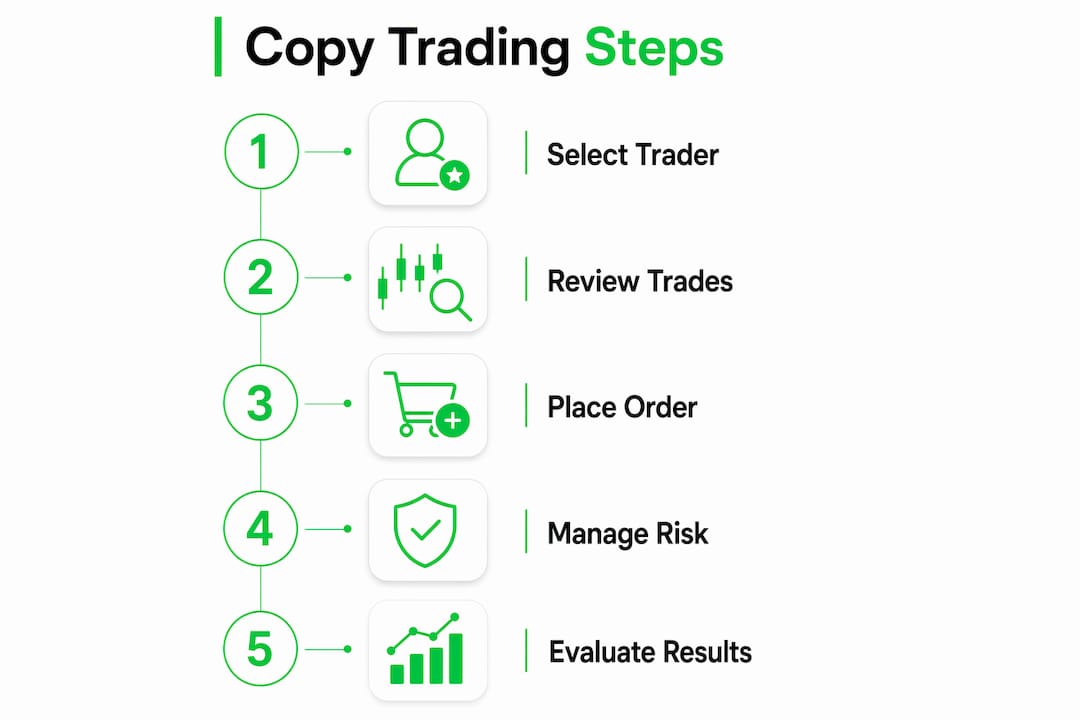
The typical workflow runs like this: a leader posts a trade idea with entry price, position size, and rationale. That signal publishes to the platform feed. Followers receive an alert. From there, execution splits into three paths: manual (you review and place the order yourself), semi-automated (you approve with one tap), or auto-copy (the platform routes the order directly).
Each path carries its own execution caveats. Slippage is the most common: by the time your order hits the market, the price the leader got may no longer be available, especially in fast-moving options markets. Partial fills happen when liquidity is thin. Allocation scaling means your position size is proportional to your capital, not the leader’s, so a $50,000 leader trade might translate to a $500 position in your account. Fee layers stack quickly: platform subscription, brokerage commissions, and any margin or financing costs all reduce net returns.
For U.S. accounts specifically, custody and regulatory structure matter. Options trades are subject to FINRA and SEC oversight, and your brokerage’s order-routing rules can affect fill quality independently of the platform you use to discover the trade.
Where do you find top traders worth following?
The fastest discovery path is a platform leaderboard filtered by verified P&L, then cross-checked against a trader’s profile page. Popularity metrics like follower count tell you nothing about skill. Verified trade history tells you almost everything.
Here’s the step-by-step filter sequence to apply:
- Set the time window to 6–12 months minimum. A 30-day leaderboard is nearly useless for options traders because a single lucky earnings play can dominate a short window. All-time rankings can be skewed by ancient history. Six to twelve months captures multiple market regimes.
- Filter by trade count. Favor traders with 200 or more trades in the period. A handful of big wins is luck until proven otherwise at scale.
- Check verified P&L, not self-reported. Platforms that audit or verify trade history through brokerage integration are the only ones worth trusting. Hypothetical or “paper” P&L is noise.
- Apply a drawdown cap. Set a maximum drawdown threshold you can tolerate. If a leader’s worst stretch would have wiped 40% of your allocated capital, that’s a mismatch regardless of their total return.
- Check asset specialization. An equity swing trader’s edge doesn’t transfer to weekly options. Match the leader’s instrument focus to your own strategy.
- Review trade frequency. A leader who trades 3 times a day requires different alert management than one who posts 3 ideas a week. Mismatched frequency creates execution pressure.
- Look at the risk score. Platforms that surface a risk or volatility score per trader let you compare leaders on a normalized basis rather than raw return.
Once you’ve shortlisted candidates, go deep on each profile. Look at the commentary attached to trades: does the leader explain the thesis, the entry trigger, and the exit plan? Or do they just post tickers? Transparency of process — entries, rationale, and sizing — matters more than headline returns when deciding who to follow.
Red flags to watch: a sudden strategy shift mid-year (from selling puts to chasing momentum), a trade count under 50 in a 12-month window, inconsistent timeframes (mixing 0DTE scalps with multi-week spreads), and profiles with no commentary or only hypothetical P&L.
Pro Tip: Build a shortlist using these minimum thresholds: tenure on the platform ≥ 12 months, total trade count ≥ 200, and max drawdown within a tolerable range. These aren’t guarantees of future performance, but they eliminate the most obvious luck-driven profiles quickly.
Which metrics actually matter when evaluating a trader?
Single-period ROI is the most-watched and least-useful metric in copy trading. A 200% return in three months is a red flag as often as it’s a signal. Prioritize consistency and risk-adjusted metrics instead.
Here’s a compact reference table with guideline thresholds drawn from practitioner recommendations:
| Metric | What It Measures | Guideline Threshold |
|---|---|---|
| Total verified P&L | Actual net profit, audited | Positive across 6+ months |
| Trade count | Sample size for skill assessment | ≥ 200 trades |
| Win rate | Percentage of profitable trades | 50% (context-dependent) |
| Average win / average loss | Reward-to-risk ratio | Win ≥ 1.5× loss |
| Max drawdown | Worst peak-to-trough loss | ≤ 25% of allocated capital |
| Return volatility | Consistency of returns | Lower is better for copying |
| Trade frequency | Operational fit for follower | Match to your alert capacity |
| Notional threshold | Minimum position size to track | ≥ $5,000 per trade |
The notional threshold deserves a specific note. Professional alert systems filter out small position adjustments and hedges, notifying only for moves above a meaningful size. A $500 position tweak in a $2 million account is portfolio maintenance, not a signal. Applying a similar threshold to your own alerts keeps the feed clean.
The prioritization order when choosing who to follow: sample size first (is there enough trade history to draw conclusions?), drawdown second (can you survive their worst stretch?), role fit third (does their instrument and style match your account?), transparency last (do they explain their trades?). Transparency is a tiebreaker, not a primary filter.
How to start following and copying traders safely
The six steps below take you from zero to a live, risk-managed copy setup. Read the full list first, then work through each one.
- Open and verify your account. Create your Optiqtrades profile and link your brokerage account. Verification unlocks the full leaderboard and trade history data.
- Build your vetted follow list. Apply the filters from Section 3. Start with 3–5 traders, not 30. A focused list of 15–25 vetted traders produces a manageable, high-signal feed; tracking dozens of small positions creates noise.
- Set allocation and scaling rules. Allocate a small percentage of your total trading capital per leader. Never concentrate more than a moderate portion across all followed traders combined. Use position caps so no single copied trade exceeds a defined notional limit.
- Enable alerts with thresholds. Turn on notifications for the traders you follow, but set a minimum move size so you’re not pinged for every minor adjustment. A curated list of trusted traders with meaningful thresholds converts a noisy feed into high-signal alerts.
- Configure auto-copy caps or manual review gates. If the platform offers auto-copy, set a per-trade maximum and a daily loss circuit breaker. If you’re copying manually, build a review habit: check the alert, confirm the trade fits your current market view, then execute.
- Monitor and journal results. Log every copied trade: entry, exit, P&L, and whether you deviated from the leader’s sizing. Monthly reviews tell you which leaders are worth keeping and which to prune.
Pro Tip: Paper-trade your follow list for two to four weeks before committing real capital. Stagger your allocations across leaders with low correlation to each other — two traders who both sell puts on the same index will blow up simultaneously in a volatility spike. Use stop-loss orders on every copied position.
Managing risk and setting realistic expectations
Copied trades are an information source, not a guaranteed income stream. Treat them the way you’d treat a well-researched analyst note: useful input, not a substitute for your own risk controls.
The practical controls to configure before you scale:
- Capital allocation cap per leader: 1–5% of trading capital. Adjust down for leaders with higher drawdown history.
- Portfolio-level diversification limit: no more than 15–20% of total capital in copied positions at any time.
- Per-trade notional threshold: set a maximum dollar amount per copied trade so a single large signal doesn’t overwhelm your account.
- Automatic stop-loss or max drawdown trigger: if a leader’s copied positions lose more than a defined percentage in a week, pause auto-copy and review manually.
On timeline: allow 3–6 months to evaluate a leader’s behavior across different market conditions. One or two large wins in a trending market tell you almost nothing about how a trader performs when volatility spikes or the trend reverses. Umar Ashraf frames it well: treat trading like a business, which means being transparent about losses as well as wins, and evaluating performance over a meaningful sample.
U.S. tax and recordkeeping note: options trades generate short-term or long-term capital gains depending on holding period, and the IRS requires you to report every realized gain and loss regardless of whether the trade was self-directed or copied. Keep copies of all trade confirmations. Use your platform’s export feature to pull a full trade history at year-end, and consult a tax advisor for options-specific treatment (Section 1256 contracts, wash-sale rules, and straddle rules all apply in specific circumstances). This article is general information, not tax or legal advice.

Pro Tip: Export your full trade history from Optiqtrades at the end of each quarter, not just at year-end. Quarterly exports make tax preparation far less painful and catch any discrepancies between platform records and your brokerage confirms.
Why Optiqtrades fits the vetting criteria for U.S. options traders
Optiqtrades was built for options traders specifically, which matters because generic copy-trading platforms often lack the instrument-level detail that options strategies require. The platform matches the key criteria outlined in this guide: verified trade history, leaderboard filters by tenure and trade count, AI evaluation on every trade, and real-time alerts.
Here’s what the platform surfaces for each trader you consider following:
- Verified trade snapshots with entries, exits, and P&L drawn from linked brokerage accounts, not self-reported figures.
- Leaderboard filters that let you sort by win rate, returns, followers, and trade count, so you can apply the 200-trade and drawdown thresholds directly.
- AI risk scores generated for each trade, giving you a normalized signal quality rating rather than raw return data.
- Integrated brokerage linking so your copied trades execute in your own account with your own brokerage’s order routing.
- Customizable alert thresholds so you only get notified when a followed trader makes a move above your defined size.
To get started on Optiqtrades: visit the trader leaderboard, apply the filters from this guide (tenure, trade count, drawdown), follow 3–5 traders that pass your checklist, then set your allocation and alert thresholds. The AI strategist tools are available for deeper trade evaluation once you’ve built your initial follow list.
Key Takeaways
Following top traders works when you combine verified data, disciplined vetting, and hard allocation caps — skipping any one of those three makes the whole process unreliable.
| Point | Details |
|---|---|
| Start small and verify | Begin with a 1–3% pilot allocation per leader and verify trade history before copying anything. |
| Use the 200-trade threshold | Favor traders with 200 or more total trades to filter out luck-driven short-term spikes. |
| Evaluate over 3–6 months | One or two big wins mean little; assess leader performance across multiple market conditions. |
| Manage alerts with thresholds | Follow 15–25 vetted traders and set a notional minimum (e.g., $5,000) to keep your feed signal-rich. |
| Track taxes and records | Export trade confirmations quarterly and report all realized gains and losses to the IRS. |
| Start on Optiqtrades | Use the Optiqtrades leaderboard with AI trade scores and verified P&L to apply this checklist directly. |
The balance between learning and copying
The conventional wisdom in copy trading is that you find a great trader, mirror their moves, and collect returns. That framing misses the actual value of following skilled traders, and it sets most followers up for disappointment.
The traders worth following long-term are the ones who explain their reasoning. A leader who posts an entry with no thesis is giving you a fish. A leader who explains why they’re selling a put spread at a specific strike, what the risk is, and when they’d exit is teaching you to fish. The return on the second type compounds in a way the first never does.
Optiqtrades’s AI evaluation layer is designed around this principle. The score attached to each trade reflects structural quality, not just outcome. A trade can be well-constructed and still lose money; it can be reckless and still win. Following traders whose AI scores are consistently high teaches you what good trade construction looks like, independent of short-term P&L.
The honest caveat: this article is published by Optiqtrades, and the platform’s performance data for individual traders is live and user-generated. Past results on any leaderboard don’t predict future returns. Use the platform as a research and learning tool first, a copying tool second.
Ready to follow top traders on Optiqtrades?
If you’ve read this far, you have a working vetting checklist, a six-step setup process, and a clear picture of the risk controls you need before copying a single trade. The next step is putting it to work.
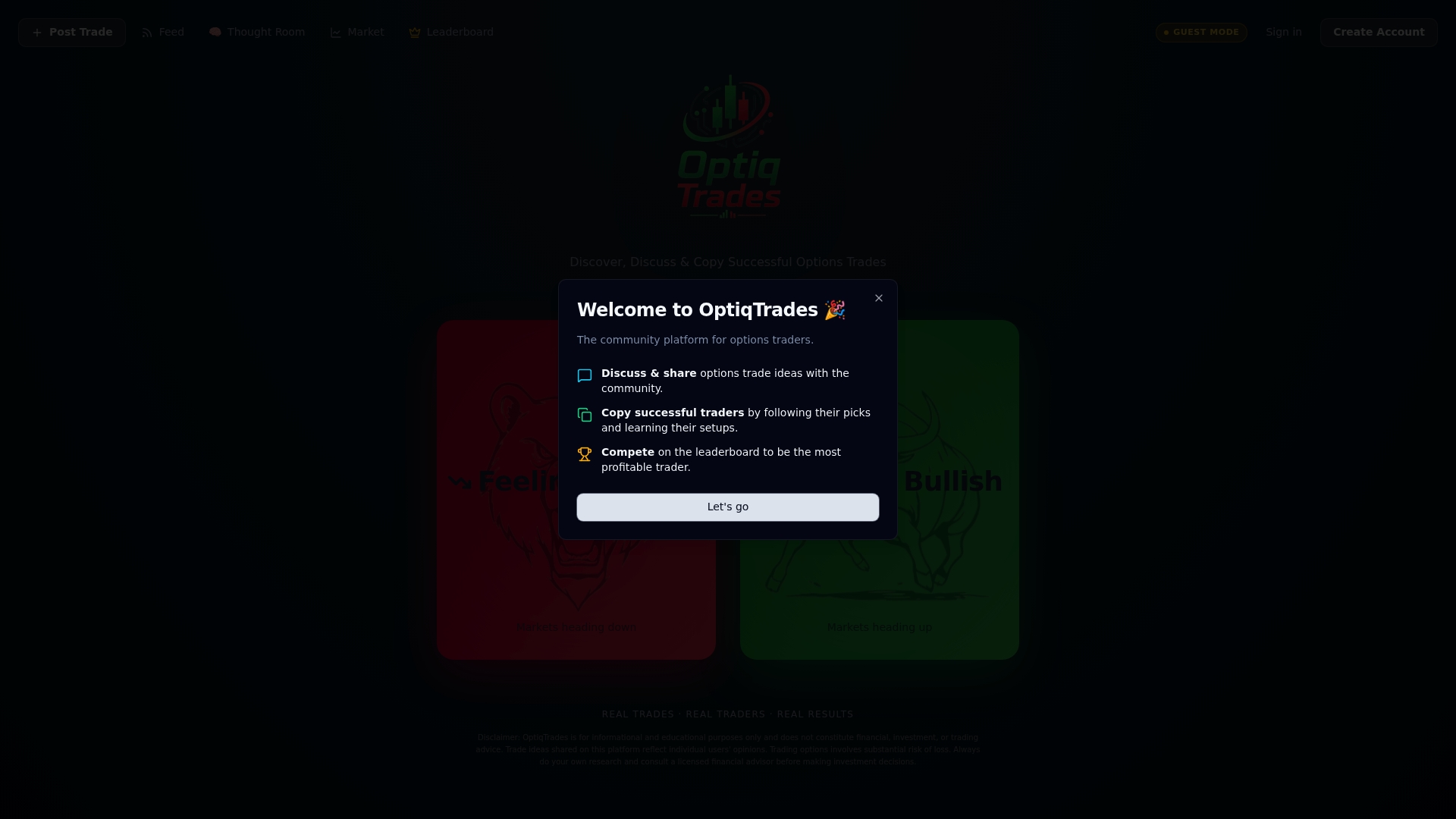
Optiqtrades is free to join, and the core features — leaderboard access, trader profiles, verified trade history, and AI trade evaluations — are available without a subscription. Premium filters and advanced analytics are available for traders who want deeper screening tools. There’s no long-term commitment to try it.
Here’s your first session plan: sign up at Optiqtrades, head to the Traders page and apply the filters from this guide, follow 3 traders that pass your checklist, and enable alerts with a notional threshold. Check the Market Hub for live community stats and trending instruments while you’re getting oriented.
Disclosure: this article is published by Optiqtrades. The educational content is designed to be applicable across platforms, but the product recommendations reflect Optiqtrades’s own features.
Useful sources for further research
The sources below are worth reading alongside this guide, particularly if you’re new to copy trading or want to understand the regulatory and tax context for U.S. options traders.
- Optiqtrades Traders page — the leaderboard and trader profiles where you apply the vetting checklist from this guide.
- Optiqtrades AI Strategist — documentation on how AI trade evaluation works and what the scores measure.
- Optiqtrades Market Hub — live indexes, trending instruments, and community stats for monitoring followed traders in context.
- 0xinsider — How to Follow Trades in Real-Time — practitioner guide on alert thresholds, follow list sizing, and filtering signal from noise in a live trade feed.
- MilleronMarkets — Bret Miller’s resource on trader transparency and why process publication matters more than headline returns.
- Chart Academy — Umar Ashraf — instructor profile covering risk management philosophy and the business-minded approach to evaluating trade performance.
- Galami Gold — Risk Disclosure — a clear example of how professional investment platforms communicate risk to participants; useful framing for understanding what good risk disclosure looks like.
- IRS Publication 550 (Investment Income and Expenses) — the primary source for how options gains and losses are taxed in the U.S., including Section 1256 contract treatment. Search directly on IRS.gov.
- SEC Investor Bulletin on Copy Trading — the SEC has published guidance on the risks of automated and copy-trading services; search “SEC copy trading investor bulletin” on SEC.gov for the current version.